

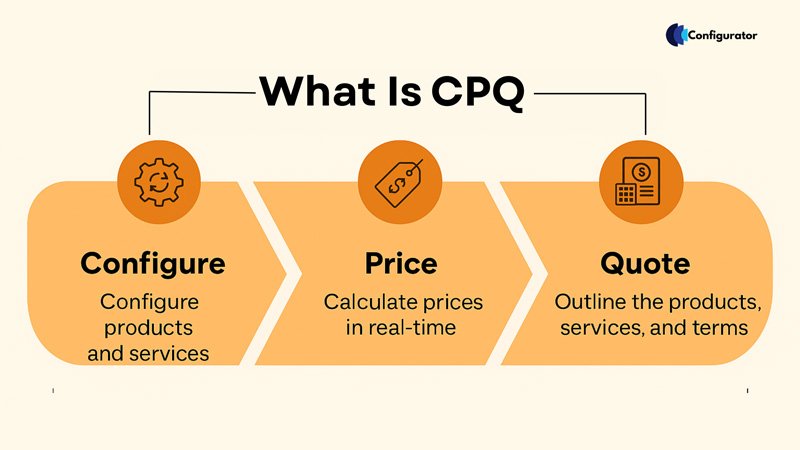
In today’s demanding sales landscape, teams must navigate complex pricing structures, an increasing number of product configurations, and customers who expect immediate responses. Many companies turn to digital tools to stay competitive, from CRM platforms to deal room software, but one solution stands out for its ability to transform the entire quoting process—CPQ. Short for Configure, Price, Quote, CPQ systems help sales teams deliver accurate quotes faster, reduce errors, and close more deals with confidence. Understanding the benefits of CPQ can help any organization streamline its sales operations and empower reps to perform at their best.
Why CPQ Matters More Than Ever
As markets become more competitive, customers expect clarity and precision at every stage of the sales cycle. Long waiting times or inconsistent pricing can instantly weaken trust, giving competitors an opportunity to step in. Traditional proposal methods—spreadsheet-based pricing, manually updated product lists, unclear approval workflows—simply cannot meet modern speed and accuracy demands.
CPQ software automates critical tasks and eliminates the human errors that slow down negotiations. Sales reps, instead of spending their time fixing calculation mistakes, can focus on nurturing relationships and closing deals. With CPQ, the organization gains tighter control over margins, while customers receive accurate quotes that reflect their needs instantly.
Core Benefits of CPQ for Productivity and Accuracy
CPQ platforms bring structure to what was once a fragmented, time-consuming process. The system walks sales reps through configuration rules, pricing logic, and required approvals, ensuring consistency across the organization. This enhanced structure benefits not only sales teams but also product managers, finance departments, and customers.
The following areas represent the core advantages CPQ brings to modern sales operations:
CPQ Enables Faster, More Accurate Quotes
One of the most important benefits of cpq is speed. Sales reps can configure products, apply discounts, and generate proposals in just minutes. Instead of searching for pricing updates or manually calculating totals, reps work within a guided system that automatically applies business rules.
Errors in pricing—one of the biggest risks in manual quoting—are reduced dramatically. Automation ensures that every quote reflects the correct configurations and is routed through the proper approvals. Customers receive proposals that are both accurate and professionally formatted, which improves confidence and reduces negotiation time.
Below is a table summarizing the core differences between traditional quoting methods and CPQ-driven processes:
Comparison: Old Quoting Process vs. CPQ-Enhanced Process
| Feature / Process | Traditional Quoting | CPQ-Based Quoting |
| Quote creation time | Hours or days | Minutes |
| Pricing accuracy | Prone to human errors | Automated, highly accurate |
| Configuration options | Limited clarity, manual checking | Guided configuration with built-in rules |
| Approval workflow | Email chains, delays | Automated routing and instant notifications |
| Customer experience | Slow, inconsistent | Fast, transparent, professional |
| Margin protection | Hard to control discounts | Automated discount limits and approval logic |
CPQ Improves Sales and Customer Collaboration
Modern buyers expect quick communication and clarity. CPQ helps both sides stay aligned by offering structured proposals, transparent pricing logic, and automated updates. When combined with tools like CRM systems or deal rooms, CPQ strengthens collaboration even further.
Sales reps can revise configurations instantly, offer multiple quote versions, or add recommended upsells without switching between systems. Customers benefit from clear visual layouts, itemized pricing, and consistent communication. This reduces back-and-forth emails and speeds up final approval.
The transparency offered by CPQ builds trust—an essential part of long-term customer relationships.
CPQ Helps Teams Scale and Standardize
As companies grow, the complexity of their product catalog and pricing expands. Without a centralized solution, sales teams struggle to maintain consistency. Multiple spreadsheets, outdated documents, and disconnected systems create confusion and inefficiency.
CPQ solves this by centralizing all configuration rules, pricing guidelines, and proposal content in one place. New sales reps learn faster because they follow guided workflows. Experienced reps enjoy the freedom to work fast without risking pricing mistakes.
This standardization supports scalable growth. Whether the sales team doubles or the product catalog expands, CPQ ensures consistency across every quote.
CPQ Increases Revenue Through Smart Upselling and Cross-Selling
One of CPQ’s most powerful features is its ability to recommend logical upsells and cross-sells automatically. Instead of relying on reps to remember product combinations or premium options, CPQ uses rule-based suggestions.
For example:
- A rep configuring a base software package may be prompted to add additional modules.
- A hardware configuration might trigger recommendations for service contracts or warranties.
- A subscription model may include automatic discount tiers or bundle suggestions.
This systematic approach increases average deal size, helping teams close more profitable sales without extra effort.
Final Thoughts
The shift toward digital selling demands tools that streamline and strengthen the sales cycle. CPQ stands out because it delivers immediate value: faster quotes, fewer errors, stronger collaboration, and higher revenue potential. When paired with CRM systems, contract tools, or deal room software, CPQ becomes the backbone of a modern, efficient sales workflow.
Whether your team manages simple product catalogs or highly complex configurations, CPQ ensures that sales reps have everything they need to connect with customers, present accurate pricing, and close deals with confidence. As organizations continue to adopt CPQ in 2026 and beyond, the sales landscape will only grow more automated, more intelligent, and more customer-focused.